El Niño Is Coming for Bangladesh's Fields. Nobody's Told the Farmers.
A Pacific Ocean warming pattern three thousand kilometres away is about to decide what's on our plates. The World Meteorological Organization says it will be strong. Our own forecasters say it might not be. Both can be true, and we still are not ready.
Something is heating up in the middle of the Pacific Ocean, and it is going to reach us before the year is out.
The World Meteorological Organization confirmed in early July that El Niño conditions have developed and are strengthening fast, with a strong event expected between July and September 2026. Sea-surface temperatures in the central and eastern Pacific are forecast to run more than 2°C above average.¹ WMO Secretary-General Celeste Saulo put it plainly: El Niño conditions are already under way and are forecast to strengthen rapidly into a strong event.¹
That’s an ocean. We live on a delta. It shouldn’t matter to us. It does anyway.
The monsoon is already behaving strangely
Bangladesh’s monsoon runs on rhythm — arrival dates farmers plan planting around, rainfall totals that decide whether a rice field floods or fails. This year the rhythm has already slipped. The Bangladesh Meteorological Department forecast the 2026 monsoon would arrive roughly a week late, with below-normal rainfall and higher-than-usual temperatures at the outset.² BMD meteorologist Md Bazlur Rashid explained that lower rainfall naturally pushes day and night temperatures higher, and that from June, Bangladesh has come under the sphere of influence of El Niño, alongside other factors like the Indian Ocean Dipole.² The met office also forecast eight to ten heatwaves over the following three months, three or four of them in June alone.³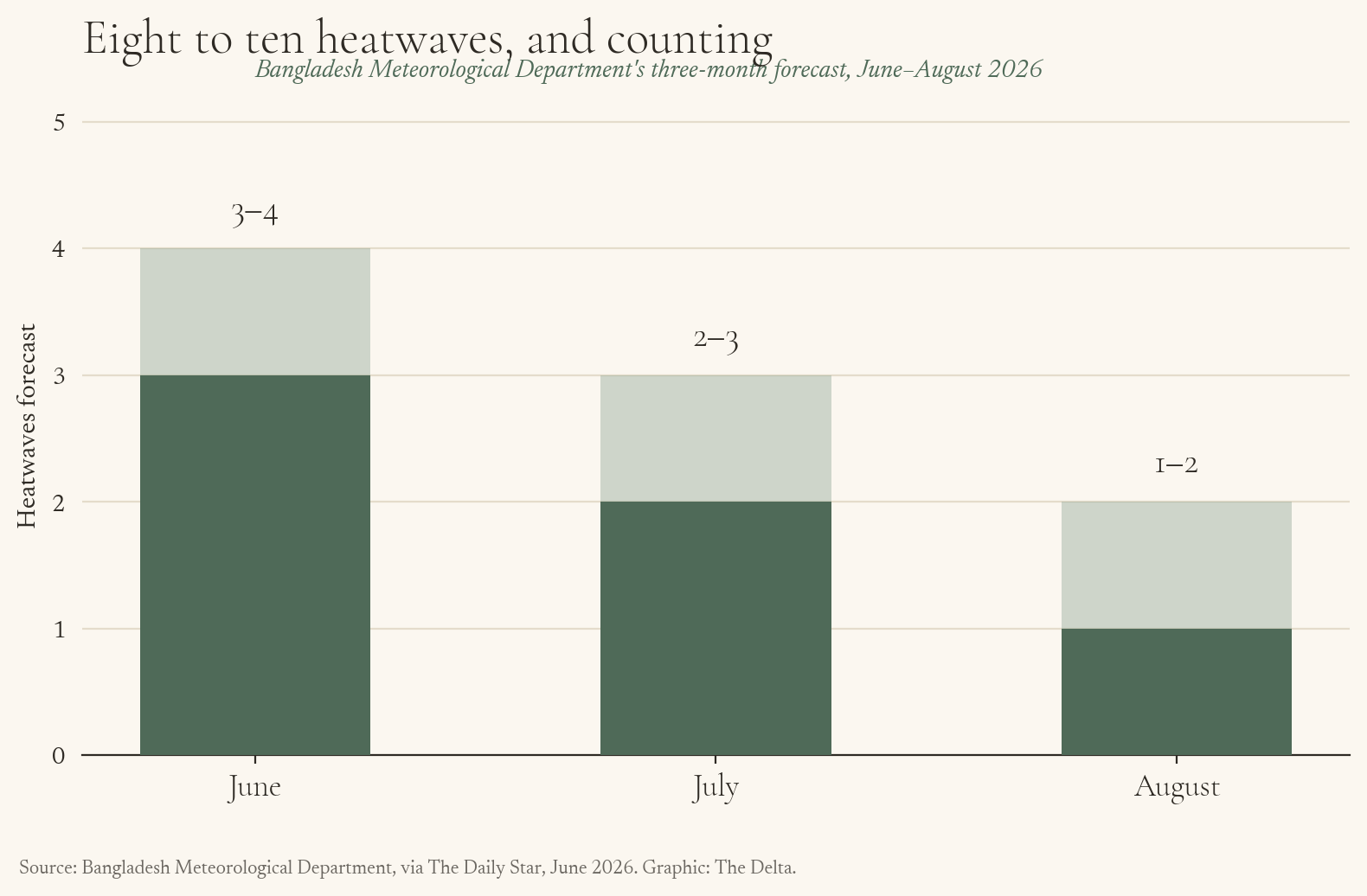
Here’s the part worth sitting with: experts aren’t calling this a certain disaster. Dr Rashed Chowdhury, a climate scientist at Arizona State University who studies El Niño specifically, told The Daily Star this year’s event is developing later than usual — closer to autumn than to the start of monsoon — which historically means a gentler bite for Bangladesh than the catastrophic droughts of 1982-83 or 1997-98.⁴ He said El Niño could have a moderate impact on Bangladesh’s monsoon in 2026, since the forces shaping South Asian rainfall are numerous and El Niño is only one of them.⁴ Fair enough. Moderate isn’t nothing, though. And moderate for the country as a whole can still mean severe for the region that gets unlucky.
Rice is not just a crop here. It’s the whole food system
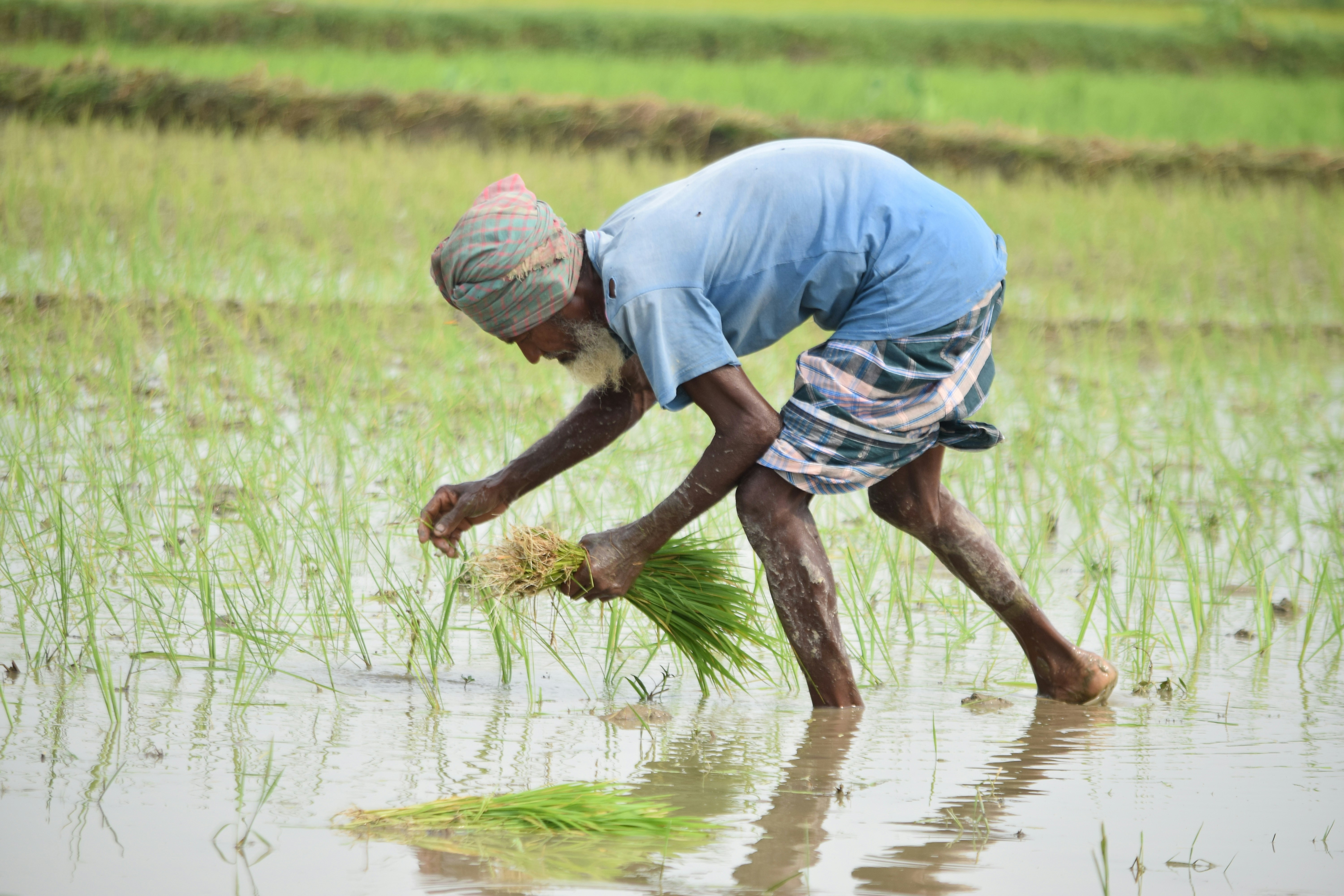
Rice covers close to four-fifths of Bangladesh’s cultivated land, and food security in this country is, more or less, rice security.⁵ Three rice seasons run through the year — Aus, Aman, and Boro — and each one has a different relationship with water. Aman depends almost entirely on monsoon rain landing on time. Delay the rain, and you delay transplanting. Delay transplanting far enough, and the crop meets its most sensitive growth stage during exactly the wrong weeks of heat.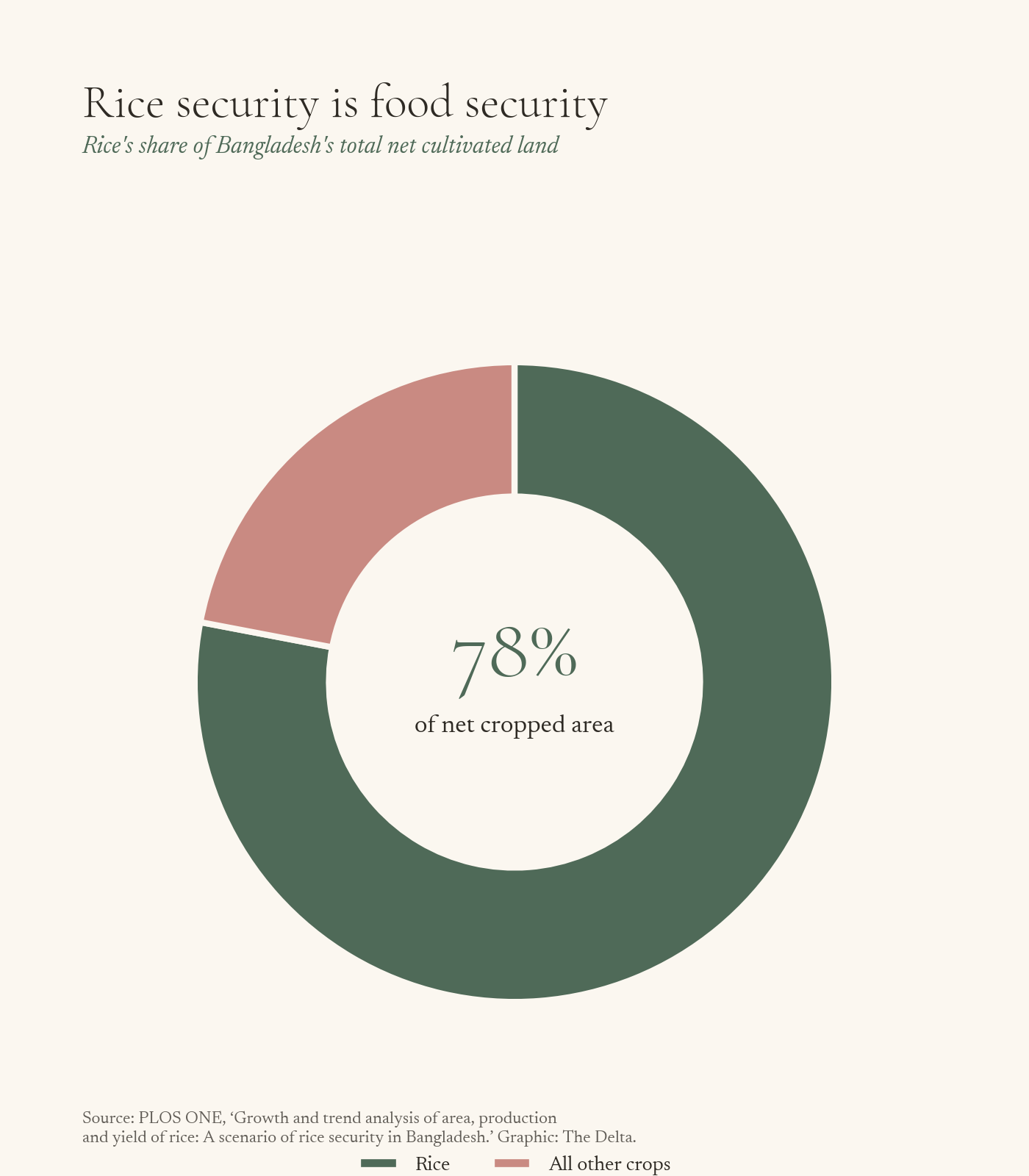
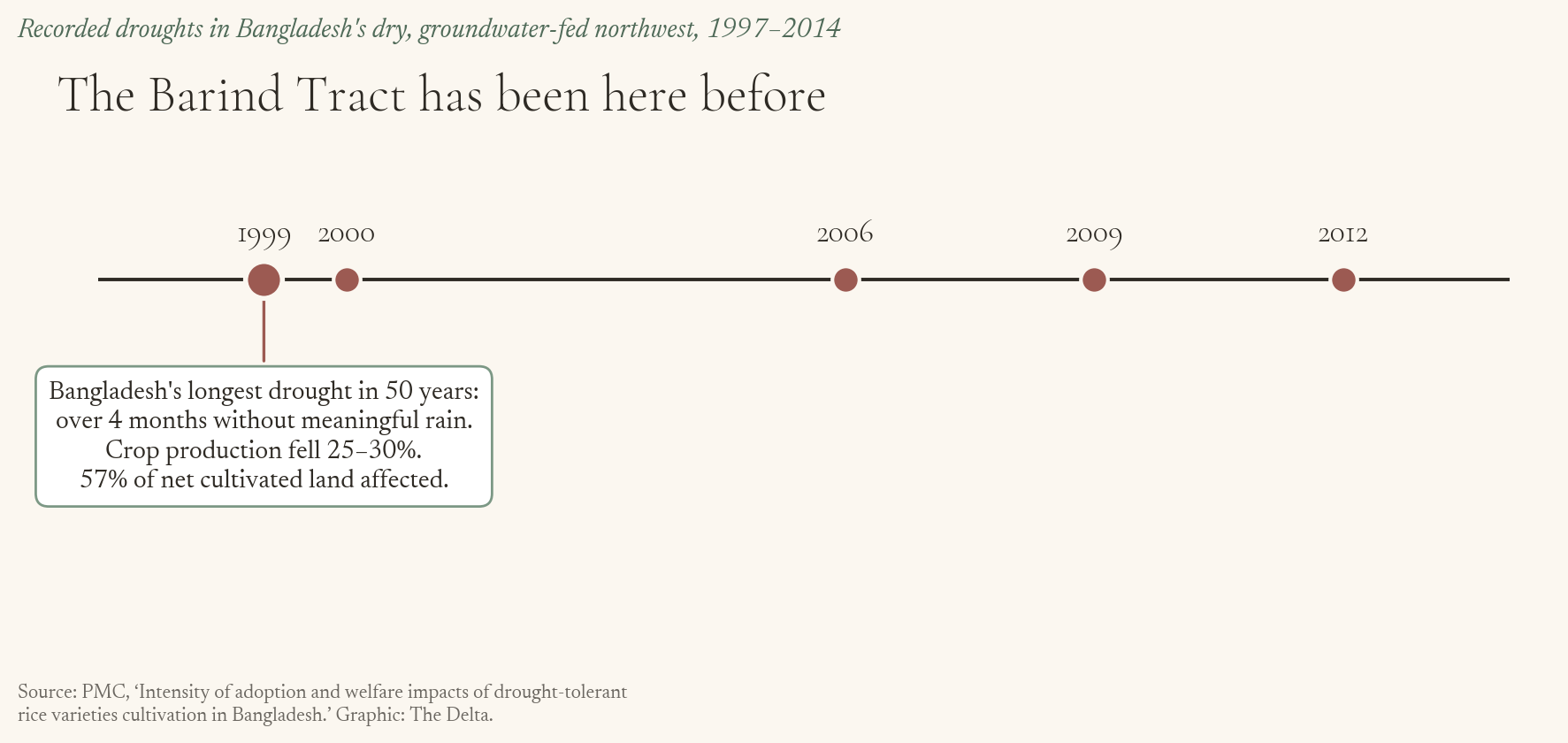
Boro is worse off in a different way. It runs through the dry season on groundwater, and the northwest — Rangpur, parts of Rajshahi, the Barind Tract — already pumps that groundwater harder than it recharges. The region has lived through serious droughts before: 1999, 2000, 2006, 2009, 2012.⁶ The 1999 drought ran more than four months without meaningful rain, dropped crop production by a quarter to a third, and touched an estimated 57% of the country’s net cultivated land.⁶ Bangladesh Rice Research Institute has since released drought-tolerant varieties bred to survive on almost nothing.⁶ That’s adaptation working. It’s also an admission of how often this keeps happening.
Who actually pays for a bad monsoon
Push rainfall down and temperatures up, and the effects don’t stop at the paddy field. Maize, pulses, vegetables, and fruit all lose ground under heat and moisture stress. Livestock eat less and produce less milk. Poultry die faster in extreme heat. Fish farms lose dissolved oxygen as water warms, which disrupts breeding. None of this happens in isolation — it happens to the same households, stacked on top of each other, in the same bad season.
And a June roundtable hosted at the National Press Club made the vulnerability list explicit: pregnant women, older people, children, and outdoor workers carry the heaviest health burden when heat rises, while the same conditions chip away at labour productivity and household income all at once.⁷ Add rising food prices — which tend to follow poor harvests almost automatically — and you’re asking the households that already spend the largest share of their income on food to absorb the largest share of the shock.
What we’re actually short of
We are not short of warning. WMO’s seasonal updates have been circulating since April.¹ What we are short of is the machinery to turn a warning into a decision — a national crop forecasting system that combines satellite data, BRRI’s agronomic research, and BMD’s weather models into something a district agriculture officer can act on before planting season, not after the yield numbers come in. We’re short of drought-tolerant seed reaching the northwest farmers who need it most, not just existing in a research paper.⁶ We’re short of a plan for what happens to a garment worker’s wages when the rice she buys costs more, because nobody budgeted for that connection.⁷
El Niño didn’t create any of these gaps. It’s just going to test every one of them, all at the same time, starting sometime around September.
**[1]** World Meteorological Organization, “El Niño is forecast to intensify, increasing likelihood of extreme weather,” July 2026. https://wmo.int/news/media-centre/el-nino-forecast-intensify-increasing-likelihood-of-extreme-weather
**[2]** The Daily Star, “Monsoon may arrive a week late: Met office,” June 2026. https://www.thedailystar.net/news/environment/weather/news/monsoon-may-arrive-week-late-met-office-4188086
**[3]** The Daily Star, “Bangladesh may feel El Niño’s heat, but not its full force,” June 2026. https://www.thedailystar.net/news/environment/weather/news/bangladesh-may-feel-el-ninos-heat-not-its-full-force-4189621
**[4]** Dr Rashed Chowdhury, Arizona State University; The Daily Star, “Bangladesh may not feel El Niño’s full force,” June 2026. https://www.thedailystar.net/news/bangladesh/news/bangladesh-may-not-feel-el-ninos-full-force-4190136
**[5]** PLOS ONE / PMC, “Growth and trend analysis of area, production and yield of rice: A scenario of rice security in Bangladesh,” 2021. https://pmc.ncbi.nlm.nih.gov/articles/PMC8664192/
**[6]** PMC, “Intensity of adoption and welfare impacts of drought-tolerant rice varieties cultivation in Bangladesh.” https://www.ncbi.nlm.nih.gov/pmc/articles/PMC9127309/
**[7]** The Business Standard, “Climate change threatens Bangladesh’s economy as productivity declines: Speakers,” June 2026. https://www.tbsnews.net/bangladesh/environment/climate-change-threatens-bangladeshs-economy-productivity-declines-speakers